


The global marketplace has changed forever. Ten years ago, a manufacturer could rely on trade shows, word-of-mouth referrals, and a simple website to attract international buyers. Today, buyers research online before making any contact. They compare dozens of suppliers across countries before sending a single inquiry. If your digital presence does not impress them, they will never find you—or worse, they will find your competitor instead.
This reality creates both a challenge and an opportunity. The challenge is that most manufacturers do not know how to effectively present themselves online. The opportunity is that those who master manufacturing capabilities presentation can win buyers before the first email is even sent.
This article is a complete guide for manufacturers who want to attract international buyers through smart, strategic online showcasing. You will learn proven online supplier portfolio building techniques that convert visitors into leads. You will discover how to implement a digital factory showroom strategy that builds trust without requiring expensive video productions. You will understand the principles of B2B manufacturer branding online that differentiate you from commodity suppliers. And you will master export readiness visual marketing that proves you can handle cross-border orders.
Whether you are a textile mill in Pakistan, a surgical instrument factory in Sialkot, or a leather tannery in Bangladesh, this guide will transform how international buyers perceive your business.

Part 1: Why Online Capability Showcasing Is No Longer Optional
Many manufacturers still believe that “if you build quality products, buyers will find you.” That was true in 1995. It is dangerously false today.
The Modern Buyer Journey
International buyers now complete 50–70% of their research before contacting any supplier. They visit websites, browse directories, check social media, and compare listings. By the time they send a message, they have already formed opinions about which manufacturers are professional, reliable, and worth their time.
What Buyers Look For Online
When evaluating potential suppliers, buyers ask silent questions:
- Does this company look legitimate?
- Can I see real photos of their factory?
- Do they have export experience?
- Are their products high quality?
- How responsive will they be?
Your online presence must answer these questions immediately. A weak manufacturing capabilities presentation signals that you are either inexperienced, unprofessional, or hiding something.
The Cost of Poor Online Presence
Manufacturers with weak online presence lose:
- Credibility: Buyers assume you are a trader or middleman.
- Opportunities: Buyers choose competitors with better digital presentation.
- Pricing power: You compete only on price, not perceived value.
- Global reach: Only local buyers find you.
Investing in online supplier portfolio building is not an expense. It is the highest-ROI marketing activity for export-oriented manufacturers.
Part 2: The Core Elements of Manufacturing Capabilities Presentation
Before diving into tactics, understand the five pillars of effective manufacturing capabilities presentation.
Pillar 1: Visual Proof of Production
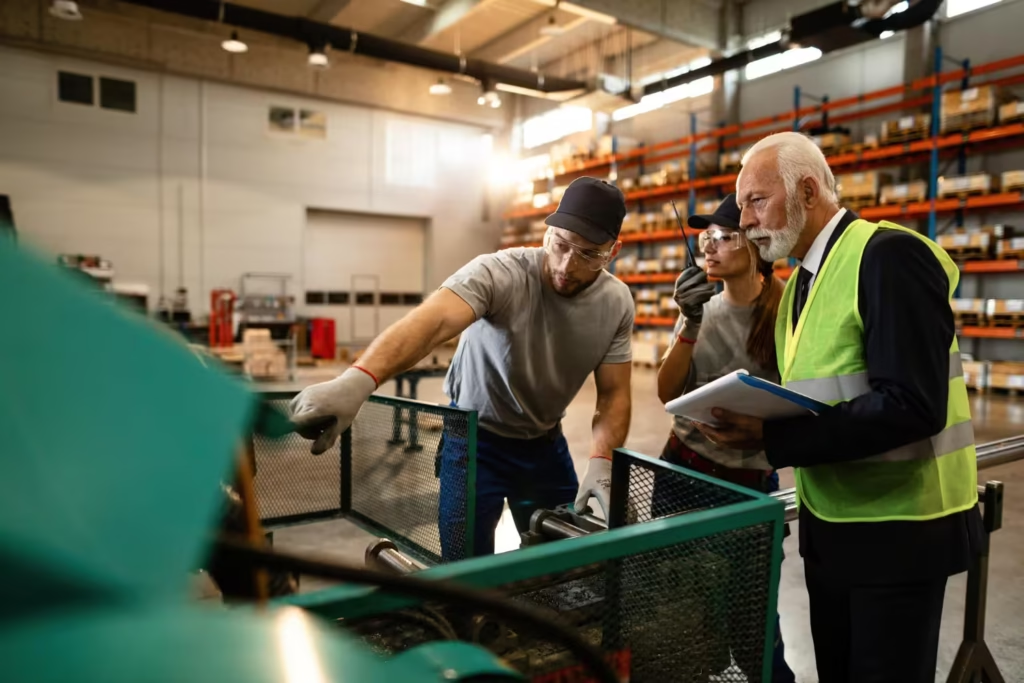
Buyers need to see that you are a real factory, not a trading office. Visual proof includes:
- Factory exterior and interior photos
- Machinery and production line images
- Quality control stations
- Raw material storage
- Finished goods warehouse
- Packing and shipping areas
Pillar 2: Product Evidence
Buyers want to see what you actually make:
- High-resolution product images (multiple angles)
- Product catalogs (downloadable PDF)
- Close-up shots showing quality details
- Products in use or packaged for export
Pillar 3: Process Documentation
Serious buyers want to understand how you work:
- Step-by-step production process
- Quality control checkpoints
- Certifications and test reports
- Lead times and production capacity
Pillar 4: Team and Facility Information
Buyers buy from people, not just companies:
- Management team photos and backgrounds
- Factory staff (skilled workers, technicians)
- Quality assurance team
- Export department contacts
Pillar 5: Social Proof and Track Record
Nothing builds trust like evidence of past success:
- Export documents (with sensitive info redacted)
- Client logos (with permission)
- Testimonials and case studies
- Years in business and export history
Mastering these five pillars is the foundation of manufacturing capabilities presentation. Now let us explore how to implement each one.
Part 3: Online Supplier Portfolio Building – A Step-by-Step Guide
Online supplier portfolio building is the process of creating a comprehensive digital presence that tells your manufacturing story. Here is exactly how to do it.
Step 1: Create a Professional Website (Your Home Base)
Your website is the most important element of B2B manufacturer branding online. A free social media page or a basic directory listing is not enough.
Essential pages for manufacturer websites:
- Homepage: Clear value proposition and hero image of your factory.
- About Us: Your history, mission, team, and facility.
- Products/Services: Detailed pages for each product category with images and specifications.
- Manufacturing Capabilities: Photos of machinery, production lines, and quality control.
- Certifications: Scanned certificates and test reports.
- Export/Logistics: Information about shipping, payment terms, and export markets.
- Contact: Direct email, WhatsApp, phone, and location map.
Technical requirements:
- Mobile-responsive design (most buyers browse on phones)
- Fast loading speed (under 3 seconds)
- Secure (HTTPS)
- Easy navigation (clear menus)
Step 2: Build a Rich Directory Profile
Even with a great website, you need to be where buyers search. A directory profile on TradingHub.trade acts as a secondary landing page that captures buyers already looking for suppliers like you.
What to include in your directory profile:
- Complete company description (who you are, what you make, export experience)
- Multiple product images (at least 5–10)
- Product catalog upload (PDF)
- Video links (YouTube or Vimeo factory tours, product demos)
- All contact methods (website, email, WhatsApp)
- Certifications and awards
Step 3: Develop a Visual Asset Library
You cannot build manufacturing capabilities presentation without visual assets. Create a library of:
Factory photos (20–30 images):
- Wide shots of production floor
- Close-ups of machinery operating
- Workers performing skilled tasks
- Quality control inspections
- Packing and shipping area
- Raw material storage
Product photos (10–20 per product line):
- White background shots (professional)
- In-context shots (product being used)
- Packaging shots (export cartons, pallets)
- Detail close-ups (stitching, finish, labeling)
Videos (3–5 minutes total):
- 30–60 second factory walkthrough
- Product demonstration (how it works)
- Quality control process
- Packaging for export
Pro tip: You do not need a professional videographer. A smartphone with good lighting and steady hands works fine. Authenticity matters more than polish.
Step 4: Write Compelling Descriptions
Visuals attract attention. Words close the deal. For every product and capability, write:
Product descriptions should include:
- Materials used (e.g., “100% cotton, 40s combed yarn”)
- Dimensions and weight
- Available colors, sizes, variations
- MOQ (minimum order quantity)
- Lead time
- Packaging details
- Certifications applicable
Company description should include:
- Year established
- Number of employees
- Factory size (square footage)
- Production capacity (units per month)
- Export markets served
- Key certifications
- Languages spoken
Step 5: Add Social Proof Elements
Trust is the currency of B2B manufacturer branding online. Add these trust signals:
Certifications:
- Upload scanned copies of ISO, CE, FDA, OEKO-TEX, GOTS, LWG, etc.
- Include dates and issuing bodies
Export evidence:
- Sample bill of lading (hide customer names)
- Certificate of Origin samples
- Past shipment photos
Client references:
- Logos of past clients (with permission)
- Short testimonials (company name, country, product sourced)
- Case studies (problem → solution → result)
Part 4: Digital Factory Showroom Strategy – Going Beyond Static Photos
A digital factory showroom strategy transforms your online presence from passive to active. Instead of just showing photos, you create an immersive experience.
What Is a Digital Factory Showroom?
A digital factory showroom is an online representation of your physical facility that allows buyers to “walk through” your operations without traveling. It can include:
- 360-degree virtual tours
- Live video calls from the factory floor
- Pre-recorded video walkthroughs
- Interactive product displays
Level 1: Video Walkthrough (Minimum Requirement)
Record a 3–5 minute video walking through your factory. Show:
- Entrance and reception
- Raw material storage
- Production floor (multiple angles)
- Quality control lab
- Finished goods warehouse
- Packing and shipping area
Upload this video to YouTube or Vimeo (unlisted or public) and link it from your website and directory profile.
Level 2: Live Video Calls
For serious inquiries, offer to conduct a live video call from your factory floor. Use WhatsApp video, Zoom, or Skype. During the call:
- Show the buyer exactly what they want to see
- Answer questions in real time
- Introduce key team members
- Demonstrate specific machines or processes
This is the most powerful trust-building tool available to manufacturers. No fake supplier can convincingly fake a live factory tour.
Level 3: 360-Degree Virtual Tour (Advanced)
For manufacturers with larger budgets, create a 360-degree virtual tour using a specialized camera or smartphone app. Buyers can click through your facility at their own pace. This is particularly effective for medical instrument manufacturers and food producers where cleanliness and organization are critical.
Level 4: Production Process Videos
Create short videos (30–60 seconds) showing individual production steps:
- Raw material cutting
- Assembly
- Quality check
- Packaging
These videos can be embedded on product pages. They answer buyer questions before they are asked.
Part 5: B2B Manufacturer Branding Online – Standing Out From Commodity Suppliers
B2B manufacturer branding online is about differentiation. When buyers compare ten suppliers making similar products, why should they choose you?
Branding Elements for Manufacturers
Your Unique Value Proposition (UVP):
What makes you different? Examples:
- “ISO 13485 certified surgical instruments with 100% inspection”
- “Vertical integration from raw cotton to finished garment”
- “LWG Gold-rated tannery with chrome-free processing”
Your Brand Voice:
Professional but approachable. Factual but confident. Avoid exaggerations (“world’s best”) and focus on specific, provable claims.
Your Visual Identity:
- Consistent logo usage
- Brand colors (2–3)
- Professional photography style
- Clean, modern layout
Messaging That Resonates With International Buyers
Buyers care about:
- Quality: “We use German stainless steel and test every batch.”
- Reliability: “98% on-time delivery rate over 5 years.”
- Communication: “English-speaking export team available via WhatsApp.”
- Compliance: “Certified for EU and US markets.”
Translate your capabilities into buyer benefits. Do not say “We have 50 machines.” Say “Our 50 automated machines ensure consistent quality for large orders.”
Case Study: Two Manufacturers, Different Results
Manufacturer A: No website, basic directory listing with 2 blurry photos, no certifications shown.
Result: Buyers assume they are a trader. Only price buyers inquire. Low conversion.
Manufacturer B: Professional website, directory profile with 15 photos, 2 videos, ISO certificate uploaded, WhatsApp contact.
Result: Buyers trust them. Higher conversion. Can command premium pricing.
The difference is B2B manufacturer branding online. It pays for itself many times over.
Part 6: Export Readiness Visual Marketing – Proving You Can Handle Cross-Border Trade
Export readiness visual marketing is the art of demonstrating that your company has the systems, documentation, and experience to handle international orders.
What Export Readiness Looks Like Online
Export documentation samples (redacted):
- Bill of lading (hide customer and pricing)
- Commercial invoice template
- Packing list
- Certificate of Origin
- Phytosanitary certificate (for agriculture)
Logistics information:
- Nearest port (name and distance from factory)
- Typical shipping times to major regions
- Common shipping methods (FCL, LCL, air)
- Incoterms you offer (FOB, CIF, EXW)
Language capabilities:
- List languages spoken by your export team (English is essential)
- Indicate if you have documentation in buyer’s language
Compliance with international standards:
- Display certification logos prominently
- Link to verification pages (if available)
- State which markets you export to (USA, EU, Middle East, etc.)
The Power of a “Virtual Export File”
Create a single PDF document (3–5 pages) titled “Export Readiness Package.” Include:
- Company profile
- Key certifications (scanned)
- Sample export documents (redacted)
- Factory photos (4–6)
- Product catalog summary
- Quality control process summary
- Logistics and shipping information
Make this PDF available for download from your website and directory profile. When a buyer asks for credentials, send this file immediately. It positions you as a serious, organized exporter.
Part 7: Common Mistakes Manufacturers Make Online
Avoid these errors that undermine your manufacturing capabilities presentation.
Mistake #1: Using Stock Photos
Nothing destroys trust faster than fake images. Buyers have seen the same stock photos across dozens of supplier profiles. Use only real photos of your actual factory and products.
Mistake #2: No Contact Information
If a buyer cannot find your WhatsApp number or email within 10 seconds, they move to the next supplier. Display contact information prominently.
Mistake #3: Outdated Content
A website with a copyright date from three years ago signals neglect. Update your content regularly. Show that your business is active.
Mistake #4: Hiding Behind Contact Forms
Buyers hate contact forms. They want direct email and WhatsApp. Provide them. The friction of a form loses leads.
Mistake #5: No Proof of Export Experience
Without export evidence, buyers assume you are a local-only supplier. Show past shipments, certificates, or client locations.
Mistake #6: Poor Quality Images
Blurry, dark, or tiny images suggest low quality products. Invest in good lighting and a decent smartphone. Clean your factory before shooting.
Mistake #7: Overpromising
Do not claim certifications you do not have. Do not show machinery you do not own. Lies are discovered quickly, and your reputation will be destroyed.
Part 8: How TradingHub.trade Helps Manufacturers Showcase Capabilities
TradingHub.trade was built specifically to help manufacturers master online supplier portfolio building and export readiness visual marketing.
Rich Media Support
Unlike basic directories that only allow a logo and text, TradingHub.trade supports:
- Multiple product images (unlimited)
- PDF catalog uploads
- YouTube and Vimeo video embeds
- Detailed company descriptions
Verified Status
Every listing on TradingHub.trade is manually reviewed. A “Verified” badge tells buyers that your company has been checked for basic legitimacy. This increases your response rate significantly.
Direct Contact Display
We show your website, email, and WhatsApp number openly. No hidden forms. No paywalls. Buyers contact you directly.
Country and Industry Focus
TradingHub.trade focuses on key manufacturing countries (Pakistan, India, Bangladesh, Vietnam, Indonesia) and major industries (textiles, leather, medical instruments, electronics, etc.). Your profile is shown to buyers specifically looking for your type of manufacturing.
Export-Ready Positioning
Our platform is designed for cross-border trade. Buyers on TradingHub.trade expect to find exporters. By listing here, you are automatically positioned as an export-ready manufacturer.
How to Get Started on TradingHub.trade
- Create an account as a supplier.
- Complete your profile with detailed information.
- Upload images (factory, products, processes).
- Add videos (YouTube/Vimeo links).
- Upload your catalog (PDF).
- List your certifications and export markets.
- Submit for review (manual approval within 24–48 hours).
Once approved, your digital factory showroom strategy is live and visible to international buyers searching for suppliers like you.
Part 9: Action Plan – 30 Days to a World-Class Online Presence
Use this timeline to transform your manufacturing capabilities presentation.
Week 1: Audit and Plan
- Review current online presence (website, directory listings, social media)
- List all missing elements from the five pillars
- Create a photo and video shot list
- Gather certification documents and export evidence
Week 2: Capture Assets
- Take 30–50 factory and product photos (good lighting, clean backgrounds)
- Record 2–3 short videos (factory walkthrough, product demo, quality check)
- Scan all certifications and export documents
- Create or update product catalog (PDF)
Week 3: Build or Update Website
- Ensure website has all essential pages
- Upload new photos and videos
- Add certification and export evidence
- Make contact information prominent
- Test on mobile devices
Week 4: Optimize Directory Profiles
- Create or update profile on TradingHub.trade
- Add all images, videos, catalogs, and certifications
- Write complete company and product descriptions
- Verify all contact information
- Submit for review
Ongoing (Monthly)
- Add new product photos
- Update certifications (if renewed)
- Respond to all inquiries within 24 hours
- Ask satisfied buyers for testimonials
Frequently Asked Questions (FAQs)
What is manufacturing capabilities presentation?
Manufacturing capabilities presentation is the art of showcasing your factory, equipment, processes, products, and certifications to potential buyers. It includes photos, videos, catalogs, and written descriptions that prove you are a legitimate, export-ready manufacturer.
Why is online supplier portfolio building important for manufacturers?
Online supplier portfolio building is critical because international buyers research online before contacting suppliers. A strong portfolio builds trust, increases response rates, and allows you to command better prices. Without it, buyers assume you are a trader or unprofessional.
What should a digital factory showroom strategy include?
A digital factory showroom strategy should include factory photos, product images, video walkthroughs, live video call capability, and for advanced users, 360-degree virtual tours. The goal is to let buyers “see” your factory without traveling.
How do I practice B2B manufacturer branding online without a big budget?
B2B manufacturer branding online does not require a large budget. Focus on authenticity: real photos (not stock), honest descriptions, clear contact information, and responsive communication. A smartphone, good lighting, and a free website builder are enough to start.
What is export readiness visual marketing?
Export readiness visual marketing is demonstrating through visuals that your company can handle international orders. This includes showing export documents (redacted), logistics information, certifications, and evidence of past shipments to foreign markets.
How many photos should a manufacturer upload to a directory profile?
Upload at least 10–15 high-quality images: 3–5 factory photos, 5–10 product photos (different angles), and 2–3 quality control or packaging photos. More is better, but quality matters more than quantity.
Can I use my smartphone for factory photography and video?
Yes. Modern smartphones produce excellent quality. Use natural light or inexpensive LED panels. Keep the phone steady (use a tripod or rest on a surface). Clean your factory before shooting. Authentic smartphone videos often feel more genuine than overly produced content.
How does TradingHub.trade help manufacturers showcase capabilities?
TradingHub.trade allows manufacturers to upload unlimited product images, PDF catalogs, and YouTube/Vimeo video links. Every listing is manually reviewed, and direct contact information is displayed openly. The platform focuses on key manufacturing countries, ensuring your profile reaches serious international buyers.
The manufacturers who win in global trade are no longer just the ones with the lowest prices or the best products. They are the ones who know how to tell their story online. Mastering manufacturing capabilities presentation transforms you from an unknown factory into a trusted partner before the first email is sent.
By implementing online supplier portfolio building, creating a digital factory showroom strategy, investing in B2B manufacturer branding online, and executing export readiness visual marketing, you will attract more inquiries, close more deals, and build lasting relationships with international buyers.
Your factory is world-class. Now it is time to show the world. Start building your profile on TradingHub.trade today.