

South Asia has quietly become the world’s most important region for three critical industries: textiles, leather goods, and medical instruments. When you wear a cotton shirt, carry a leather bag, or undergo surgery with a stainless steel scalpel, there is a high probability that product originated in Pakistan, India, or Bangladesh. These three nations have spent decades perfecting their manufacturing capabilities, building export infrastructure, and training skilled workforces.
Yet many international buyers still overlook this region or treat it as a single, undifferentiated market. That is a costly mistake. Each country has unique strengths, specializations, and advantages. Understanding the nuances of south asian manufacturing sourcing can unlock significant cost savings, quality improvements, and reliable supply chains.
This article dives deep into the textile leather medical supply chain across Pakistan, India, and Bangladesh. You will learn which country leads in each sector, how to find Pakistan India Bangladesh exporters that are genuinely reliable, where to locate verified surgical instruments suppliers for medical products, and how to navigate cross-border fabric and leather trade successfully.
Whether you are sourcing denim from Bangladesh, leather gloves from Pakistan, or surgical forceps from India, this guide will give you the practical knowledge you need to build profitable, long-term partnerships.
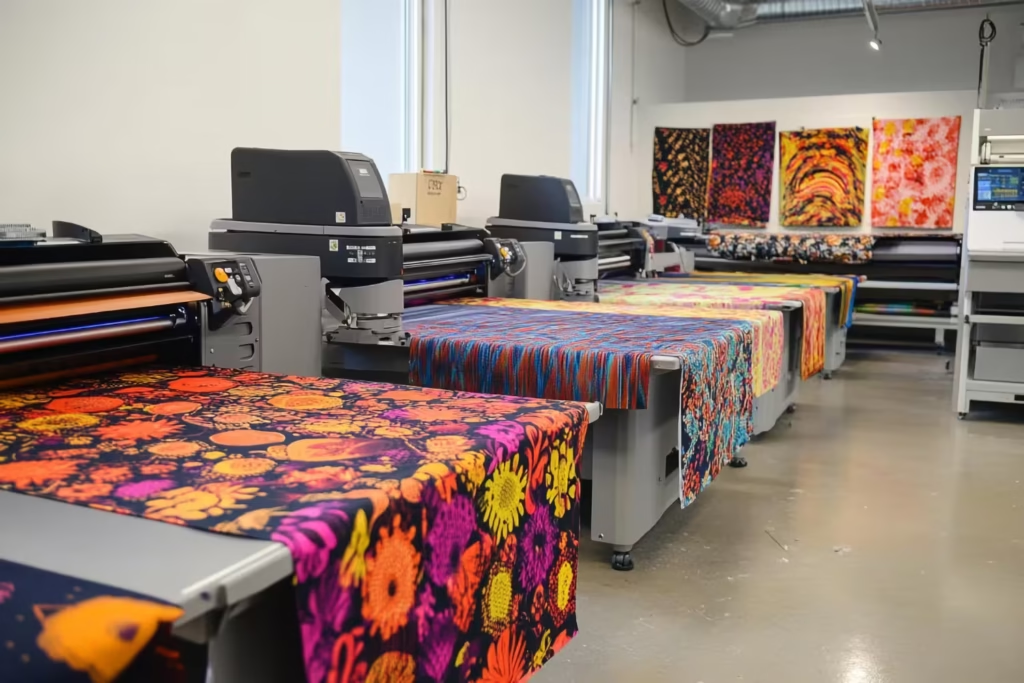
Part 1: Why South Asia Dominates These Three Industries
Before we examine each country individually, let us understand why Pakistan, India, and Bangladesh have become global leaders in textiles, leather, and medical instruments.
Historical Advantages
The Indian subcontinent has been a center of textile production for over 5,000 years. Cotton cultivation, weaving, and dyeing are deeply embedded in the culture. Leather tanning dates back centuries. More recently, the medical instruments industry grew from colonial-era repair shops into world-class manufacturing clusters.
Labor Cost Advantage
Labor costs in South Asia remain significantly lower than China, Europe, or North America. A skilled garment worker in Bangladesh earns a fraction of a counterpart in Vietnam or Mexico. This cost advantage allows manufacturers to offer competitive pricing without sacrificing quality.
Raw Material Access
- Textiles: India and Pakistan are among the world’s largest cotton producers.
- Leather: Pakistan and India have massive livestock industries, providing abundant raw hides.
- Medical Instruments: Stainless steel and other metals are readily available.
Export Infrastructure
All three countries have developed special economic zones (SEZs), export processing zones (EPZs), and dedicated freight corridors. Major ports in Karachi, Mumbai, Chittagong, and Dhaka handle millions of containers annually.
Government Support
Export incentives, tax holidays, and subsidized credit are available to manufacturers in all three countries. Each government actively promotes south asian manufacturing sourcing to international buyers.
Now, let us explore each country’s specific strengths.
Part 2: Pakistan – World Leader in Leather, Surgical Instruments, and Home Textiles
Pakistan is often called the “hidden gem” of south asian manufacturing sourcing. It does not receive the same attention as India or Bangladesh, but its specialized clusters produce world-class products.
Textiles in Pakistan
Pakistan is the 8th largest textile exporter globally. The industry contributes over 60% of the country’s total exports.
Key textile products from Pakistan:
- Home Textiles: Bed sheets, towels, curtains, and pillowcases. Pakistani home textiles are renowned for high thread counts and durability.
- Denim: Pakistan is one of the largest denim producers, supplying brands like Levi’s, H&M, and Zara.
- Cotton Yarn and Fabric: Raw cotton and intermediate textile products.
- Knitwear: T-shirts, sweaters, and sportswear.
Why source textiles from Pakistan:
- Vertically integrated mills (spinning, weaving, dyeing, finishing, stitching under one roof)
- Competitive pricing (10–15% lower than India for similar quality)
- Strong compliance with international standards (OEKO-TEX, GOTS, BSCI)
- English-speaking business culture
Major textile clusters:
- Faisalabad (the “Manchester of Pakistan”)
- Karachi
- Lahore
- Sialkot
Leather in Pakistan
Pakistan’s leather industry is among the top 10 globally. The country produces finished leather, leather garments, gloves, bags, and footwear.
Key leather products from Pakistan:
- Leather Gloves: Pakistan is the world’s largest exporter of leather work gloves and fashion gloves.
- Leather Garments: Jackets, coats, and vests.
- Leather Bags and Accessories: Handbags, wallets, belts.
- Finished Leather: Calf, goat, sheep, and buffalo leather for other manufacturers.
Why source leather from Pakistan:
- Abundant raw hides from the world’s 4th largest livestock population
- Advanced tanneries using modern chrome-free and eco-friendly processes
- Specialized clusters in Karachi and Sialkot
- Competitive pricing for finished leather goods
Leather sourcing tip: Look for tanneries with LWG (Leather Working Group) certification for environmental compliance.
Medical Instruments in Pakistan
This is where Pakistan truly excels. The city of Sialkot produces approximately 70% of the world’s hand-held surgical instruments.
Key medical instruments from Pakistan:
- Surgical Forceps, Scissors, and Needle Holders
- Orthopedic Implants and Instruments
- Dental Instruments
- Veterinary Instruments
- Beauty and Manicure Tools
Why source medical instruments from Pakistan:
- Unmatched specialization (over 1,500 surgical instrument manufacturers in Sialkot alone)
- ISO 13485, CE, and FDA certifications widely available
- German and Japanese stainless steel used by top manufacturers
- Prices significantly lower than European or American equivalents
- Generations of craftsmanship passed down through families
Finding verified surgical instruments suppliers:
Use a verified surgical instruments suppliers directory to identify manufacturers with proper certifications. TradingHub.trade lists pre-vetted Pakistani surgical exporters who have proven quality systems in place.
Part 3: India – The Diversified Powerhouse for Textiles and Leather
India is the largest economy in South Asia and a dominant force in south asian manufacturing sourcing. Its scale and diversity are unmatched in the region.
Textiles in India
India is the world’s 6th largest textile exporter, with strengths across the entire value chain.
Key textile products from India:
- Cotton Textiles: India is the world’s largest cotton producer.
- Silk: India is the 2nd largest silk producer.
- Technical Textiles: Geotextiles, medical textiles, and industrial fabrics.
- Handloom and Heritage Textiles: Banarasi silk, Pashmina, Ikat, and block-printed fabrics.
Why source textiles from India:
- Massive scale (millions of looms and thousands of factories)
- Innovation in sustainable and organic textiles
- Strong design and product development capabilities
- Well-developed logistics and export infrastructure
Major textile clusters:
- Tirupur (knitwear capital)
- Ludhiana (woolen garments)
- Surat (synthetic textiles)
- Bhilwara (suiting fabrics)
- Panipat (home textiles and blankets)
Leather in India
India is the 2nd largest producer of footwear and the 4th largest producer of leather goods globally.
Key leather products from India:
- Footwear: Dress shoes, casual shoes, sandals, and safety footwear.
- Leather Garments: Jackets and coats.
- Leather Goods: Bags, wallets, belts, and saddlery.
- Finished Leather: Various types for B2B supply.
Why source leather from India:
- Large domestic market drives economies of scale
- Government-supported leather parks with common effluent treatment plants
- Growing focus on eco-friendly and chrome-free tanning
- Strong design and fashion orientation
Major leather clusters:
- Chennai (the “Detroit of India’s leather industry”)
- Kolkata
- Kanpur
- Agra (famous for footwear)
Medical Instruments in India
While not as specialized as Pakistan’s Sialkot cluster, India has a growing medical devices industry.
Key medical instruments from India:
- Disposable Medical Products: Syringes, gloves, catheters.
- Surgical Sutures and Staplers
- Diagnostic Instruments
- Hospital Furniture and Equipment
Why source medical instruments from India:
- Large pharmaceutical and healthcare ecosystem
- Competitive pricing for disposables
- Growing FDA-approved manufacturing facilities
Note: For high-end reusable surgical instruments, Pakistan (Sialkot) remains the preferred source. For disposables and consumables, India is very competitive.
Part 4: Bangladesh – The Apparel King
Bangladesh is often called the “apparel capital of the world.” It is the 2nd largest garment exporter globally, behind only China.
Textiles in Bangladesh (Apparel Focus)
Unlike India and Pakistan, which produce a wide range of textile products, Bangladesh is hyper-focused on ready-made garments (RMG). This specialization has made it incredibly efficient.
Key textile products from Bangladesh:
- Knitwear: T-shirts, polo shirts, underwear, socks.
- Woven Garments: Shirts, pants, jackets, denim.
- Sweaters and Knit Accessories
- Home Textiles: (smaller share than Pakistan)
Why source apparel from Bangladesh:
- Lowest labor costs in the region for garment manufacturing
- Highly specialized factories (many focus on a single product type)
- Large-scale production capacity (factories with 10,000+ workers are common)
- Strong compliance improvements after the 2013 Rana Plaza accord
- Preferential trade access to EU and other markets
Major garment clusters:
- Dhaka (surrounding industrial zones)
- Chittagong
- Gazipur
- Narayanganj
Important note for buyers: Bangladesh is less strong in raw fabric production. Many garment factories import fabric from China or India, then cut, sew, and finish in Bangladesh. Factor this into your supply chain planning.
Leather in Bangladesh
Bangladesh has a smaller but growing leather industry.
Key leather products from Bangladesh:
- Leather Footwear
- Leather Bags and Accessories
- Finished Leather
Major leather cluster:
- Hazaribagh (being relocated to Savar Leather Industrial Park for environmental compliance)
Why consider Bangladesh for leather:
- Lower costs than India for some products
- Growing investment in modern tanneries
Medical Instruments in Bangladesh
This is a nascent industry in Bangladesh. For serious medical instrument sourcing, focus on Pakistan (surgical) and India (disposables). Bangladesh is not yet a major player.
Part 5: Side-by-Side Comparison – Textiles, Leather, Medical Instruments
| Industry | Pakistan | India | Bangladesh |
|---|---|---|---|
| Textiles | Home textiles, denim, cotton yarn | Cotton, silk, technical textiles, handloom | Apparel (knitwear and woven garments) |
| Strength | Vertical integration | Scale and diversity | Cost leadership in garments |
| Leather | Gloves, garments, finished leather | Footwear, garments, saddlery | Footwear, bags (growing) |
| Strength | World #1 in leather gloves | Large domestic market | Low labor costs |
| Medical Instruments | Surgical instruments (Sialkot – world leader) | Disposables, sutures, hospital furniture | Very limited |
| Strength | 70% of global hand-held surgical instruments | Pharma ecosystem synergy | Not recommended |
Part 6: How to Find Pakistan India Bangladesh Exporters
Finding genuine Pakistan India Bangladesh exporters requires a systematic approach. Here is a proven framework.
Step 1: Use a Specialized B2B Directory
General search engines and global directories mix manufacturers with traders, retailers, and scammers. Use a platform like TradingHub.trade that focuses on south asian manufacturing sourcing and pre-verifies listings.
Step 2: Verify Export Experience
A company may be a great local manufacturer but have zero export experience. Ask for:
- Past bills of lading (redacted)
- Export certificates (Certificate of Origin)
- Client references from your country or region
Step 3: Request a Manufacturing Capabilities Showcase
A legitimate exporter will happily share:
- Factory photos (real, not stock)
- Product images and catalogs
- Video tours of production lines
- Quality control documentation
Step 4: Check Certifications by Industry
For textiles:
- OEKO-TEX (chemical safety)
- GOTS (organic cotton)
- BSCI or SEDEX (social compliance)
- GRS (recycled materials)
For leather:
- LWG certification (environmental)
- ISO 9001 (quality)
- REACH compliance (chemical safety for EU)
For medical instruments:
- ISO 13485 (medical devices quality management)
- CE marking (EU market)
- FDA registration (US market)
- ISO 11135 (sterilization)
Step 5: Order Samples Before Bulk
Never place a large order without testing. Order samples from at least 2–3 shortlisted suppliers. Compare:
- Product quality
- Packaging
- Shipping time
- Communication responsiveness
Part 7: Navigating Cross-Border Fabric and Leather Trade
When engaging in cross-border fabric and leather trade between South Asia and your country, consider these factors.
Logistics and Shipping
Major ports:
- Pakistan: Karachi Port, Port Qasim
- India: Jawaharlal Nehru Port (Mumbai), Chennai, Mundra
- Bangladesh: Chittagong Port
Average transit times to North America/Europe:
- Sea freight: 25–40 days
- Air freight: 3–7 days (expensive, for samples or urgent orders)
Payment Terms
Standard payment terms for first-time relationships:
- 30% advance, 70% against shipping documents (Letter of Credit or TT)
- For trusted partners: LC at sight or 30-60 days credit
Communication Best Practices
- Use WhatsApp for quick questions (all three countries have high WhatsApp usage)
- Use email for formal communications (specifications, POs, contracts)
- Be mindful of time zones (UTC+5 to UTC+6)
- Respect local holidays (Eid, Diwali, Durga Puja, Independence Days)
Quality Control Options
- Pre-shipment inspection: Hire a third-party agency (SGS, Bureau Veritas) or request video inspection.
- In-line inspection: Visit the factory or hire local agents.
- AQL sampling: Use Acceptable Quality Limit standards (typically AQL 1.5 or 2.5 for apparel).
Part 8: Why TradingHub.trade Is Your Gateway to South Asian Sourcing
TradingHub.trade specializes in connecting international buyers with Pakistan India Bangladesh exporters across textiles, leather, and medical instruments. Here is why we are the right partner for your south asian manufacturing sourcing needs.
Country-Specific Focus
We do not try to cover 200 countries poorly. We focus deeply on Pakistan, India, Bangladesh, Vietnam, and Indonesia—proven global B2B manufacturing hubs.
Industry Specialization
Our platform covers the industries that matter most in South Asia:
- Textiles & Apparel
- Leather Products
- Medical & Surgical Instruments
- Electronics, Automotive, and more
Verified Listings
Every company on TradingHub.trade is manually reviewed. We ensure they provide real contact information, genuine product images, and clear descriptions of their manufacturing or export capabilities.
For Medical Instruments Specifically
We understand that sourcing medical instruments requires extra diligence. Our verified surgical instruments suppliers category includes manufacturers with proper certifications (ISO, CE, FDA) and proven export experience.
Rich Supplier Profiles
Each listing can include:
- Official website
- WhatsApp contact (critical for South Asian communication)
- Business email
- Product images and downloadable catalogs
- YouTube/Vimeo product videos
This manufacturing capabilities showcase helps you evaluate suppliers before making contact.
Direct Access
No contact forms. No paywalls. You see the supplier’s direct contact information immediately. This accelerates your cross-border fabric and leather trade negotiations.
Part 9: Practical Sourcing Checklist
Use this checklist when sourcing textiles, leather, or medical instruments from Pakistan, India, or Bangladesh.
Pre-Sourcing (Week 1)
- Define product specifications (materials, dimensions, colors, packaging)
- Set target MOQ and budget
- Identify which country specializes in your product
- Create a list of 10–20 potential suppliers using a south asian manufacturing sourcing platform
Evaluation (Week 2)
- Contact 5–10 suppliers via WhatsApp or email
- Request product images, catalogs, and certification copies
- Ask for past export proof (bills of lading or client references)
- Conduct video calls to see factory floors
Sampling (Week 3–4)
- Order samples from 2–3 top candidates
- Test samples against your specifications
- Compare pricing (including shipping and duties)
- Check communication quality and responsiveness
Negotiation & First Order (Week 5–6)
- Negotiate payment terms (start with LC or 30% advance)
- Sign a purchase order with clear specifications
- Arrange pre-shipment inspection
- Place a small trial order (not full container)
Scaling (Month 2+)
- Evaluate first order quality and delivery
- Build relationship with preferred supplier
- Consider diversifying across 2–3 suppliers for risk management
Frequently Asked Questions (FAQs)
Which country is best for textile sourcing – Pakistan, India, or Bangladesh?
It depends on the product. For home textiles (sheets, towels), Pakistan is best. For apparel/garments, Bangladesh offers the lowest costs. For cotton fabric, silk, or technical textiles, India has the most variety. Your south asian manufacturing sourcing strategy should match product to country specialization.
Where should I source surgical instruments?
Pakistan, specifically Sialkot, produces approximately 70% of the world’s hand-held surgical instruments. For verified surgical instruments suppliers, focus on Pakistani manufacturers with ISO 13485 and CE certifications. TradingHub.trade lists many such suppliers.
Are Pakistan India Bangladesh exporters reliable?
Yes, when properly vetted. Thousands of international companies source successfully from these countries. The key is using a textile leather medical supply chain platform that pre-verifies exporters and then doing your own due diligence (samples, video calls, certifications).
What certifications should I look for in textile suppliers?
For cross-border fabric and leather trade, request OEKO-TEX (chemical safety), GOTS (organic), BSCI (social compliance), and ISO 9001 (quality management). These are common among professional exporters.
How do I verify a leather supplier in Pakistan?
Look for LWG (Leather Working Group) certification for environmental compliance. Request photos of their tannery. Ask for test reports showing chrome levels and physical properties. Order small samples first.
What are the payment terms when sourcing from South Asia?
For first-time relationships, expect to pay 30% advance and 70% against shipping documents (Letter of Credit or TT). After trust is built, some suppliers offer 30–60 days credit. Always use written contracts.
How long does shipping take from Pakistan, India, or Bangladesh?
Sea freight to North America or Europe takes 25–40 days. Air freight takes 3–7 days but is much more expensive. For samples, use DHL, FedEx, or UPS (3–5 days).
How does TradingHub.trade help with sourcing medical instruments?
TradingHub.trade maintains a list of verified surgical instruments suppliers from Pakistan’s Sialkot cluster. Each listing is manually reviewed, and suppliers can showcase their certifications, factory photos, and product videos, making your south asian manufacturing sourcing faster and safer.
Textiles, leather, and medical instruments represent three of the most dynamic sectors in global trade. By focusing your south asian manufacturing sourcing efforts on Pakistan, India, and Bangladesh, you gain access to world-class production at competitive prices. Each country offers unique strengths: Pakistan for home textiles, leather gloves, and surgical instruments; India for scale and diversity; Bangladesh for cost-effective apparel.
Use a textile leather medical supply chain platform like TradingHub.trade to connect with Pakistan India Bangladesh exporters that are pre-vetted and ready for international business. For verified surgical instruments suppliers, look to Sialkot, Pakistan. And for all your cross-border fabric and leather trade needs, follow the systematic sourcing process outlined in this guide.
Your ideal manufacturing partner in South Asia is waiting. Start your search today.