
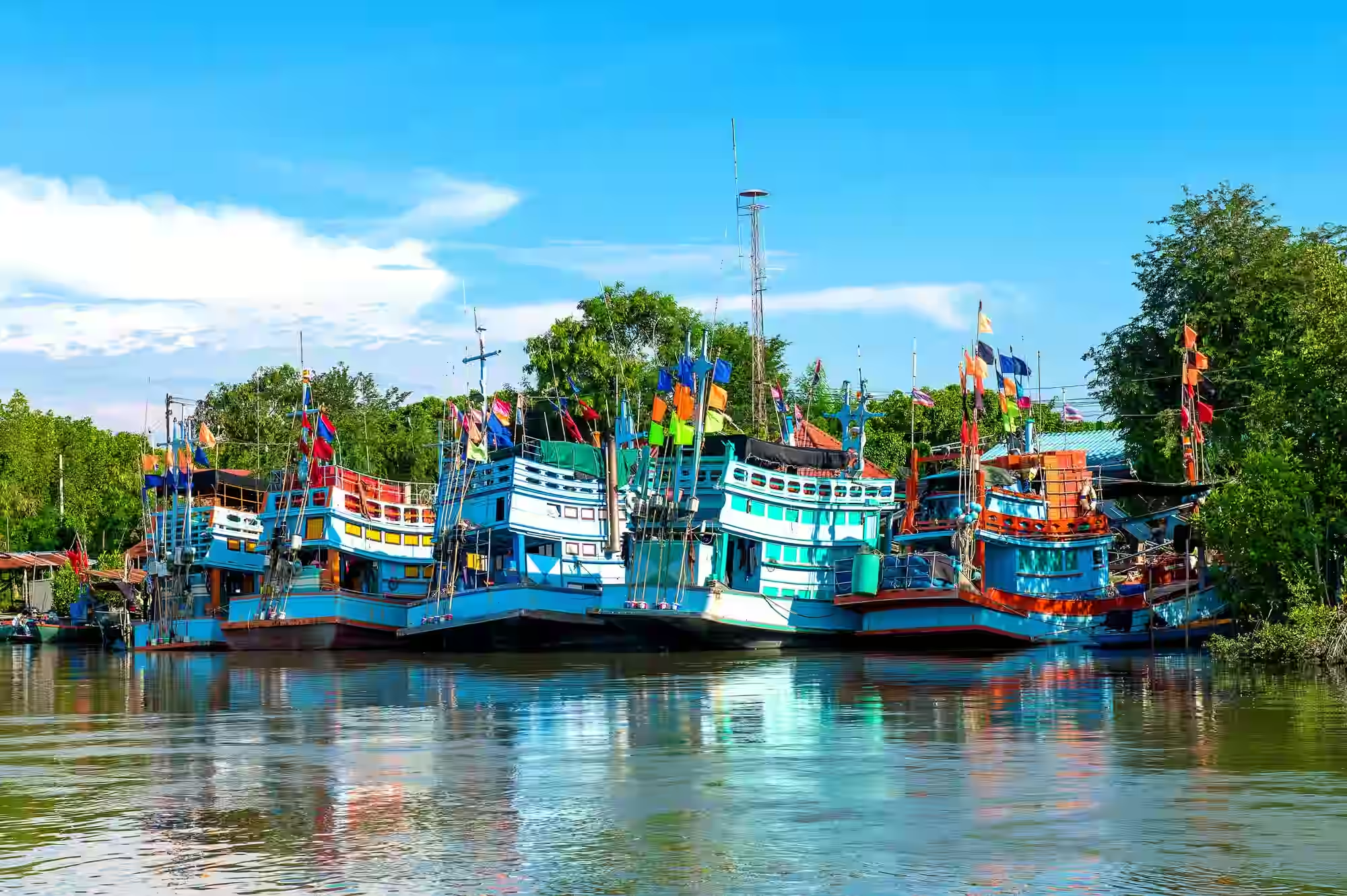

Introduction to Bangladesh’s Unique Products
Global trade is shifting. As we approach 2026, savvy importers are moving away from saturated markets like China and Vietnam and turning their attention to the “Next Eleven” economy: Bangladesh.
Why Bangladesh? While the world knows this nation for ready-made garments (RMG), the last five years have seen massive diversification in manufacturing quality. The Bangladeshi government offers tax breaks on export-oriented sectors, and labor costs remain among the most competitive globally ($120–$150 per month).
If you are looking for products to import from Bangladesh that yield high profit margins (30%–50%+), you cannot rely on basic t-shirts. You need niche, value-added goods.
In this guide, we reveal the top 6 products that will dominate 2026 import lists. And most importantly — once you know what to import, you need to know who to buy from. That is where Trading Hub comes in.
👉 Pro Tip: Throughout this article, whenever you see a product category, head over to https://tradinghub.trade/ and search for verified manufacturers and suppliers in Bangladesh.
Why Import from Bangladesh in 2026? (The Economic Shift)
Before diving into the product list, let us look at the macroeconomics. Three factors make 2026 the “Year of Bangladesh.”
1. The China +1 Strategy Matures
By 2026, the “China +1” strategy will no longer be a trend; it will be standard operating procedure. Bangladesh offers duty-free access to the EU (EBA regulation) and Canada, and GSP to the USA. This gives you a 10-15% tariff advantage over Chinese competitors.
2. Infrastructure Completion
The Padma Bridge (opened 2022) and the Matarbari deep-sea port (operational by 2026) will cut shipping times to Europe and the USA by 3-5 days. Faster logistics mean faster inventory turnover.
3. Currency Advantage
The Bangladeshi Taka (BDT) is projected to remain stable to slightly depreciated against the USD/EUR through 2026. This creates a natural currency hedge for importers.
Where to Find Reliable Suppliers in Bangladesh
Before we list the products, let us solve the biggest problem importers face: finding trustworthy manufacturers.
You can spend weeks on Google, get lost on Alibaba, or risk dealing with unverified middlemen. Or, you can use a dedicated business listing platform.
Trading Hub Trade is a growing directory of verified Bangladeshi manufacturers, exporters, and suppliers across all major industries. Whether you need leather tanneries, jute mills, ceramic factories, or seafood processors — you can find their contact information, product catalogs, and certifications in one place.
How to use it:
- Go to https://tradinghub.trade/
- Search by product category (e.g., “leather goods” or “jute textiles”)
- Filter by location, certification, or minimum order quantity
- Contact suppliers directly
Now, let us get into the profitable products you should be searching for.
Product #1: High-End Leather Goods (Bags, Wallets, Belts)
Profit Margin Potential: 40% – 60%
HS Code: 4202 (Handbags, wallets), 4203 (Apparel leather)
Search on Trading Hub Trade: Leather Goods Manufacturers in Bangladesh
Why It Is Profitable in 2026
Bangladesh is consistently ranked among the top 5 leather producers globally. By 2026, the government will have fully compliant “eco-leather” certification (Leather Working Group Gold). European buyers are desperate for ethical, traceable leather.
You can buy full-grain cowhide for $8–$12 per square meter (vs. $25 in Italy) and turn it into a $50 retail bag.
Top Selling SKUs for 2026
- Vegan leather alternatives (cactus/piñatex)
- Minimalist leather backpacks (high demand among Gen Z)
- RFID-blocking wallets (lightweight, high shipping density)
How to Find Suppliers
Head to Trading Hub Trade and search for:
- “Leather bag manufacturers Dhaka”
- “Eco-leather tanneries Bangladesh”
- “Export-ready leather goods suppliers”
Look for listings that include LWG Gold certification and REACH compliance badges.
Product #2: Jute & Sustainable Geo-Textiles
Profit Margin Potential: 35% – 50%
HS Code: 5310 (Jute fabric), 4601 (Plaited jute)
Search on Trading Hub Trade: Jute Product Suppliers in Bangladesh
The Green Revolution
The world is banning single-use plastics. By 2026, the EU’s Packaging and Packaging Waste Regulation (PPWR) will be in full force. Bangladesh controls over 70% of the world’s jute supply.
The high-profit product is Jute Geo-textiles — biodegradable mats for erosion control, slope stabilization, and organic farming.
Cost Breakdown
- Jute geo-textile rolls: ~$0.50 per square meter
- European synthetic alternatives: $2.50 per square meter
- Your margin: 80% on raw material cost
Best Products in This Category
- Jute shopping bags (with cotton lining and zippers)
- Jute wall coverings (high margin for interior designers)
- Jute composite boards (furniture material)
Where to Find Suppliers
On Trading Hub Trade, search for:
- “Jute geo-textile exporters”
- “Bangladesh jute mills directory”
- “Eco-friendly jute bag manufacturers”
Verify that the supplier is registered with the Bangladesh Jute Mills Corporation (BJMC).
Product #3: Frozen & Processed Seafood (Shrimp & Hilsa)
Profit Margin Potential: 25% – 45% (High volume, recurring orders)
HS Code: 0306 (Crustaceans), 0305 (Dried fish)
Search on Trading Hub Trade: Seafood Exporters in Bangladesh
The “Middle Class” Protein Boom
Global seafood demand is outpacing supply. Bangladeshi aquaculture (shrimp and prawn farming) is expanding by 8% annually. By 2026, Bangladesh will be a top 3 supplier of Black Tiger Shrimp to the USA.
The Hilsa Opportunity (High Risk, High Reward)
Hilsa (Tenualosa ilisha) is impossible to farm — only wild caught. The taste is revered by the Bengali diaspora in London, NYC, and the Middle East.
- Buy price in Bangladesh: $8 per kg
- Sell price in Queens, NYC: $45 per kg
Processed Products with Highest ROI
- IQF (Individually Quick Frozen) shrimp — peeled and deveined
- Ready-to-cook fish fillets — marinated with turmeric and chili
- Dried shrimp powder — lightweight for shipping
Finding Verified Seafood Exporters
Visit Trading Hub Trade and filter for:
- “EU/HACCP certified seafood processors”
- “Frozen shrimp exporters Chittagong”
- “Hilsa fish suppliers for export”
Warning: Only work with suppliers who display their FDA registration number on their Trading Hub Trade listing.
Product #4: Light Engineering & Bicycle Parts
Profit Margin Potential: 30% – 55%
HS Code: 8712 (Bicycles), 8483 (Transmission shafts)
Search on Trading Hub Trade: Engineering Products Manufacturers
The “Made in Bangladesh” Industrial Leap
Bangladesh exports bicycles to Germany — one of the toughest quality standards on earth. Companies produce frame sets, rims, and chains at 40% of the Taiwanese cost.
Why 2026 Is Specific
Post-COVID, Europe is subsidizing cycling infrastructure. Germany wants 10 million new e-bikes by 2030. Bangladesh is pivoting to e-bike conversion kits and alloy frames.
High Profit Import Products
- Carbon steel bicycle chains: $0.30 cost → $1.20 retail
- Aluminum alloy rims (700c): $4.50 cost → $15 retail
- Hand tools (wrenches, pliers): 1/3 the price of Stanley
Finding Light Engineering Suppliers
On Trading Hub Trade, search for:
- “Bicycle parts manufacturers Bangladesh”
- “Light engineering products exporters”
- “Hand tool suppliers Dhaka”
Look for suppliers located in the Kalurghat Heavy Industrial Zone (Chittagong) — these are the most reliable.
Product #5: Ceramics & Bone China Tableware
Profit Margin Potential: 50% – 70% (The hidden gem)
HS Code: 6911 (Tableware), 6913 (Ornamental)
Search on Trading Hub Trade: Ceramics Manufacturers in Bangladesh
The Best Kept Secret
If you want a product to import from Bangladesh with almost zero competition on Alibaba, it is ceramics. Bangladesh produces bone china that rivals Wedgwood (UK) at a fraction of the cost. Why? Natural gas is cheap in Bangladesh, and firing kilns are the most expensive part of ceramic production.
The Numbers
- Cost per plate (fine bone china): $1.20 – $1.80 FOB Chittagong
- Retail price in Western home goods stores: $12 – $25
- Your margin: 70%+
Top Selling Patterns for 2026
- Matte black dinner sets (Gen Z wedding registry favorite)
- Reactive glaze bowls (handmade look, machine precision)
- Microwave-safe travel mugs (commuter market)
Finding Ceramic Suppliers
Head to Trading Hub Trade and search for:
- “Bone china tableware exporters”
- “Ceramic dinner set manufacturers Bangladesh”
- “Custom ceramic mug suppliers”
Focus on smaller exporters in the Kashimpur Industrial Area — they are more willing to customize small orders.
Product #6: IT Outsourcing & Digital Products (Zero Shipping)
Profit Margin Potential: 80% – 90% (The highest on this list)
Search on Trading Hub Trade: IT & Digital Service Providers in Bangladesh
Wait, Can You “Import” a Service?
Yes. From a trade balance perspective, importing software development or graphic design from Bangladesh counts as an “import of services.” For 2026, this is the most profitable thing you can “buy” because shipping cost is $0 and tariffs are $0.
The Talent Pool
Bangladesh has 700,000+ IT freelancers. The government has built 28 “Hi-Tech Parks” with tax holidays until 2030. You can hire a senior full-stack developer for $15/hour vs. $80/hour in the US.
Best Digital Products to “Import” for Resale
- White-label SaaS tools — Hire a team to build an inventory management app. Slap your logo on it.
- Shopify app development — Outsource coding to Dhaka. Sell subscriptions for $49/month.
- 3D product rendering — Bangladeshi artists charge $20 per model. US agencies charge $200.
Finding IT Service Providers
On Trading Hub Trade, search for:
- “Software development companies Bangladesh”
- “White-label SaaS developers”
- “3D rendering services Dhaka”
Verify that the provider has a physical office address listed and client testimonials.
The 2026 Sourcing Strategy (Step by Step)
You now know the products and where to find suppliers. Here is your exact action plan.
Step 1: Research Suppliers on Trading Hub Trade
Start by visiting https://tradinghub.trade/. Use the search bar to find at least 5-10 suppliers for your chosen product category. Save their contact details and compare their product catalogs.
Step 2: Verify Credentials
Check each listing for:
- Business address and phone number
- Export registration certificate
- Certifications (ISO, LWG, HACCP, etc.)
- Years in business
Step 3: Request Samples
Never place a bulk order without samples. Use the contact information from Trading Hub Trade to request product samples. Expect to pay for shipping — this is normal.
Step 4: Negotiate Terms
Standard terms for Bangladesh in 2026: 30% advance, 70% against copy of Bill of Lading. Do not pay 100% upfront.
Step 5: Use a Freight Forwarder
Chittagong Port is busy. Use a freight forwarder with direct carrier contracts. Average cost for a 20FT container from Chittagong to Rotterdam: $1,800 – $2,500.
Risk Analysis for Importing from Bangladesh
No sourcing guide is complete without honesty. Here are the real risks for 2026.
| Risk | Probability | Mitigation Strategy |
|---|---|---|
| Political Hartals (Strikes) | Medium | Time shipments for dry season (Nov–Mar). Avoid July–August. |
| Currency fluctuation | Low | Negotiate contracts in USD only. Never agree to BDT pricing. |
| Lead time slippage | High | Add a 20% buffer to factory quotes. Promise retail customers “4-6 weeks.” |
| Supplier fraud | Low (if verified) | Only use suppliers listed on Trading Hub Trade with verified badges. |
Frequently Asked Questions
Do I need a license to import from Bangladesh?
In most Western countries (USA, UK, EU), no specific license is required for under $2,500. For commercial quantities, you need an EIN (USA) or VAT number (EU).
Is Alibaba reliable for Bangladeshi products?
Not yet. Most Bangladeshi factories are not on Alibaba. Use Trading Hub Trade instead — it is specifically focused on Bangladeshi manufacturers.
How do I know if a supplier is legitimate?
Check their listing on Trading Hub Trade for verification badges, years in business, and contact information. Always order samples before bulk orders.
Can I find small MOQ (Minimum Order Quantity) suppliers?
Yes. Unlike China, many Bangladeshi suppliers accept MOQs of 500–1,000 units for products like leather goods and ceramics. Use the filter on Trading Hub Trade to find small-batch manufacturers.
What is the cheapest shipping method?
Sea freight (FCL or LCL) via Chittagong Port. Air freight is only for high-value, low-weight items like leather wallets.
Conclusion: Your First Move for 2026
The window for first-mover advantage in Bangladesh is closing, but it is not shut. By 2027, larger importers will have locked up the best leather tanneries and jute mills. 2026 is the sweet spot.
Your immediate action plan:
- Do not try to import basic t-shirts or jeans. The margin is only 5-10%. Stick to the high-profit list above: leather goods, jute geo-textiles, ceramics, and IT services.
- Go to Trading Hub Trade right now and search for your chosen product category. Bookmark at least 5 supplier profiles.
- Order samples of ceramics (Product #5) and jute geo-textiles (Product #2). These have the lowest competition and highest perceived value.
- Start with IT outsourcing (Product #6) today. It costs $500 to test the market, not $50,000.
Bangladesh is not just the next China — it is the next Italy for leather and the next Germany for engineering, but at Vietnamese prices.
Import smart. Profit high. And always start your search at Trading Hub.
Additional Resources
- Find Suppliers: https://tradinghub.trade/
- Export Promotion Bureau Bangladesh: epb.gov.bd
- Bangladesh Tariff Commission: btc.gov.bd